September 24, 2026 • Sajid Ali
Blog
Guides to variance, standard deviation and related statistics, each with a fully worked numeric example.
 Statistics
September 24, 2026 • Sajid Ali
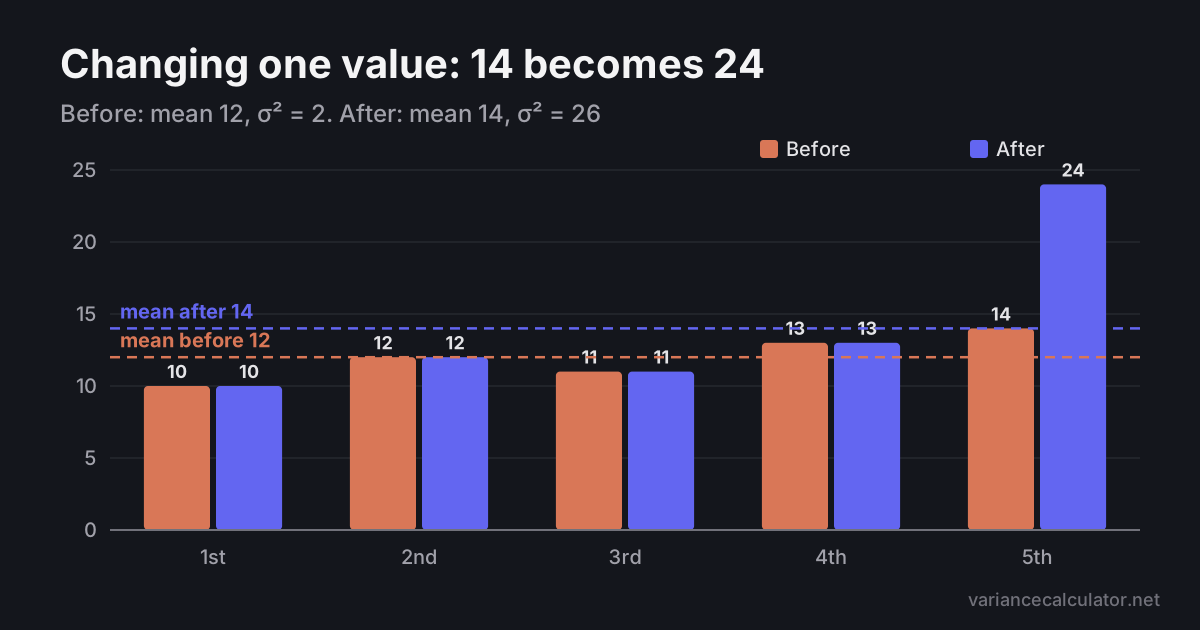
How Does Changing One Data Value Affect the Variance?
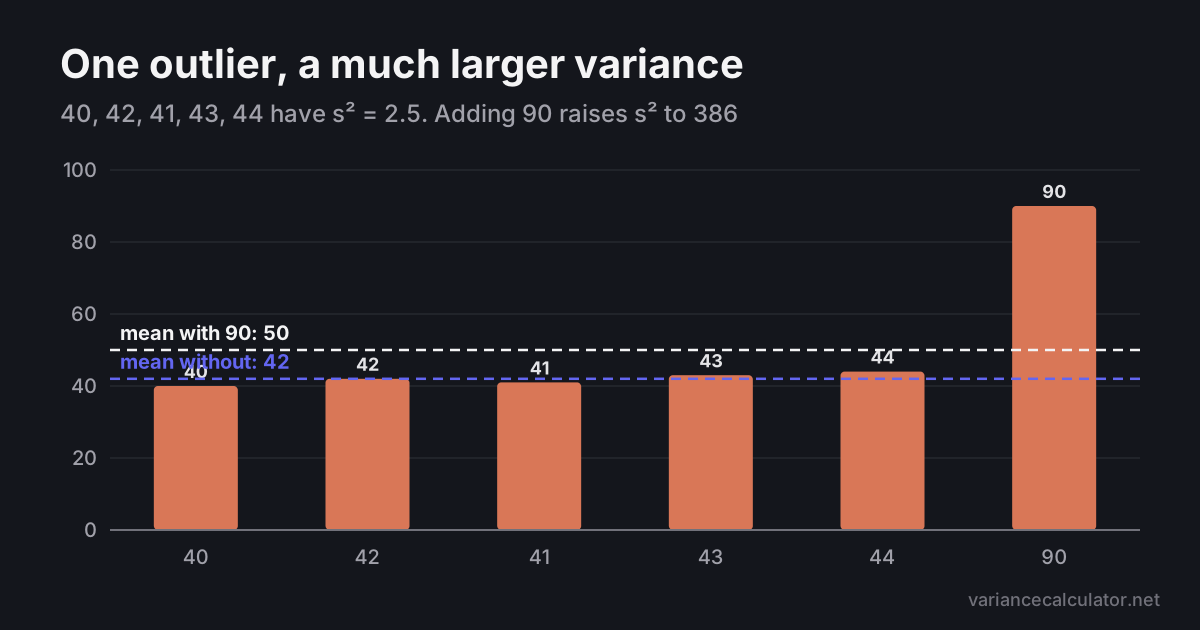
Change one number and the mean, every deviation and the variance all move. A worked example shows how much, and why values far from the mean matter most.
 Statistics
September 24, 2026 • Sajid Ali
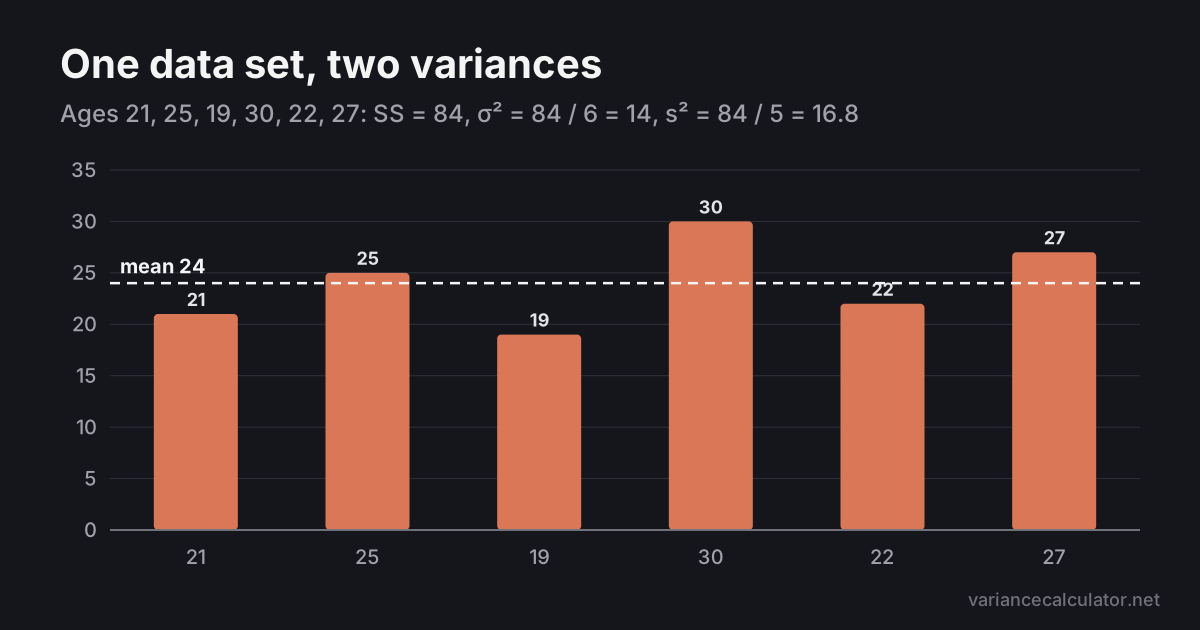
How to Calculate Population Variance vs. Sample Variance Without Confusion
When to divide by n and when to divide by n − 1. A worked example applies both formulas to the same six numbers and explains the difference.
 Statistics
September 24, 2026 • Sajid Ali
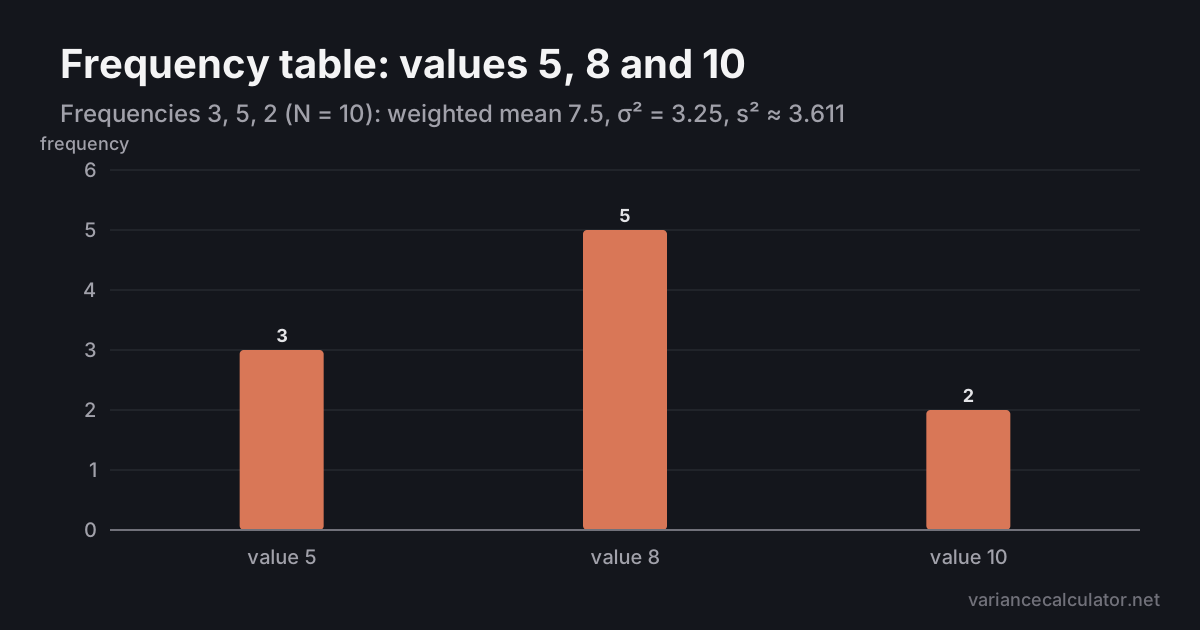
How to Calculate Variance From a Frequency Table Step by Step
Calculate variance from a frequency table by weighting each value by its frequency. A complete worked example, plus how to handle grouped data with class midpoints.
 Statistics
September 24, 2026 • Sajid Ali
What Does Variance Actually Tell You About Your Data?
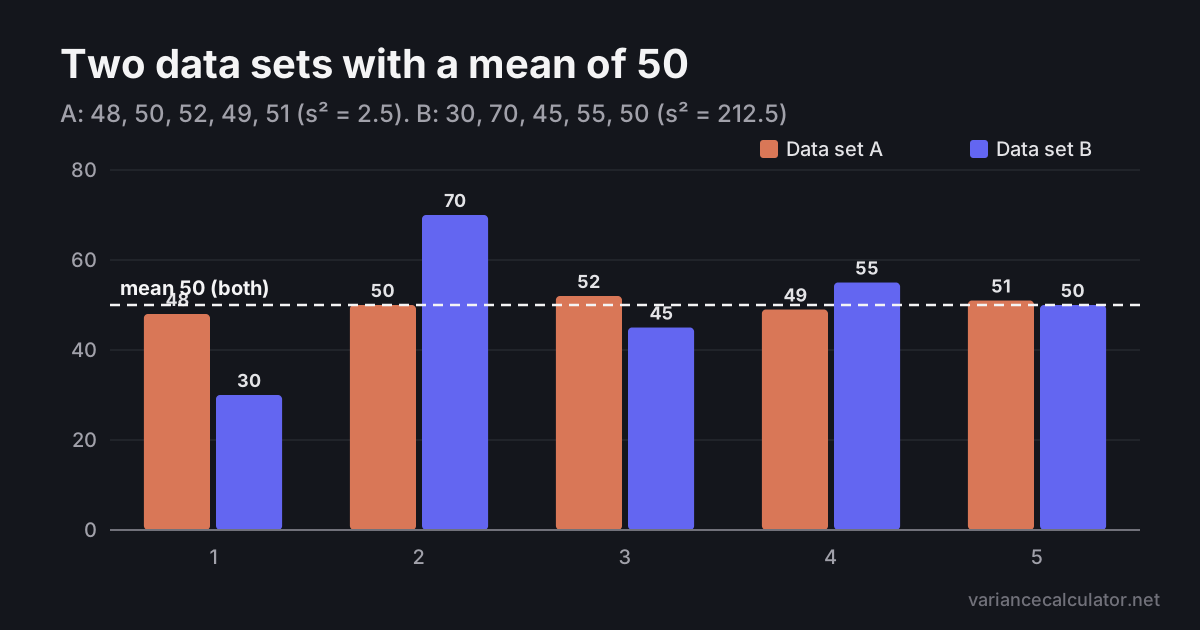
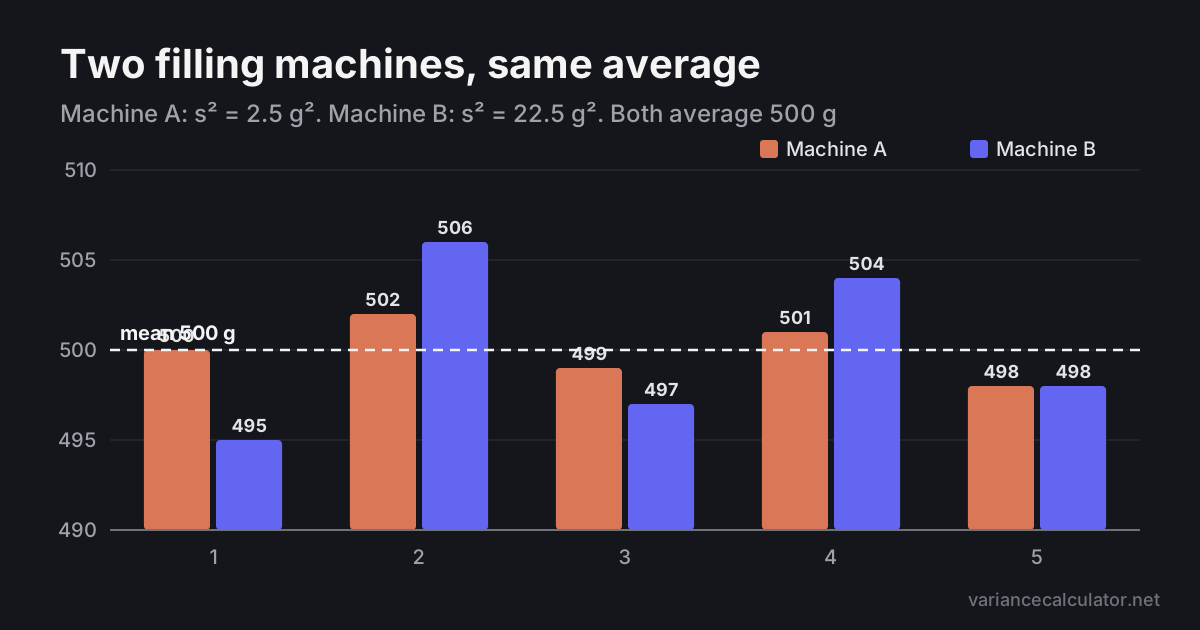
How to read a variance: what small and large values mean, why it must be judged against the mean and the units, and a worked comparison of two data sets.
 Statistics
September 24, 2026 • Sajid Ali
What’s the Difference Between Variance and Standard Deviation?
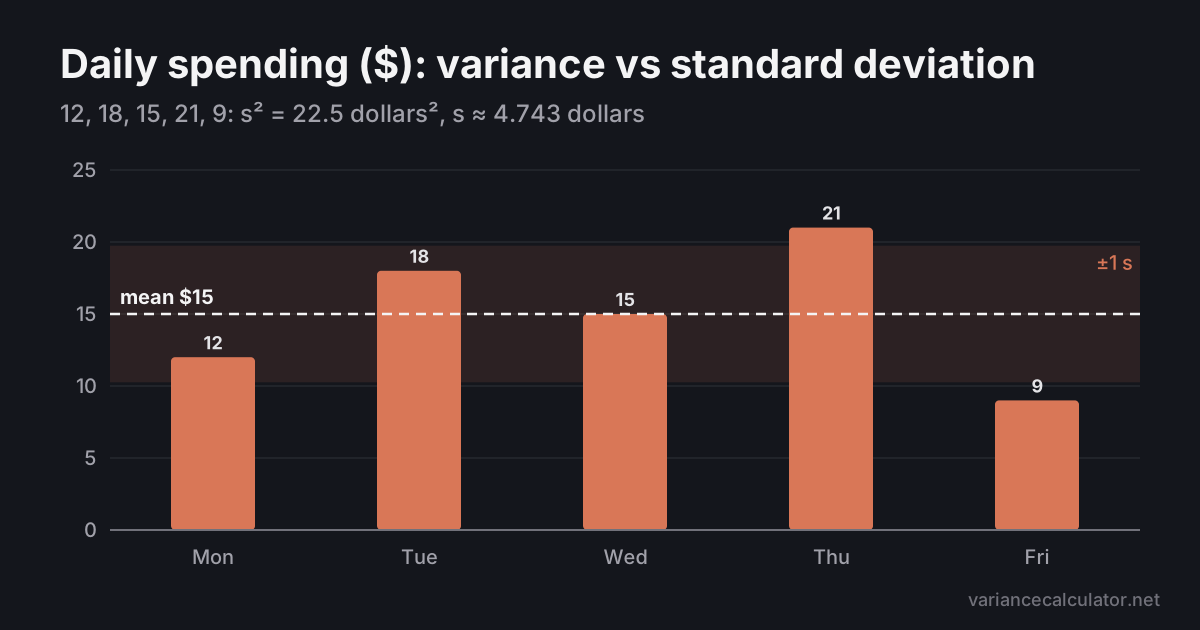
Variance and standard deviation describe the same spread on different scales. How they connect, what their units mean, which to report, and a worked example.
 Statistics
September 24, 2026 • Sajid Ali
Can You Calculate Variance Without Finding Every Deviation First?
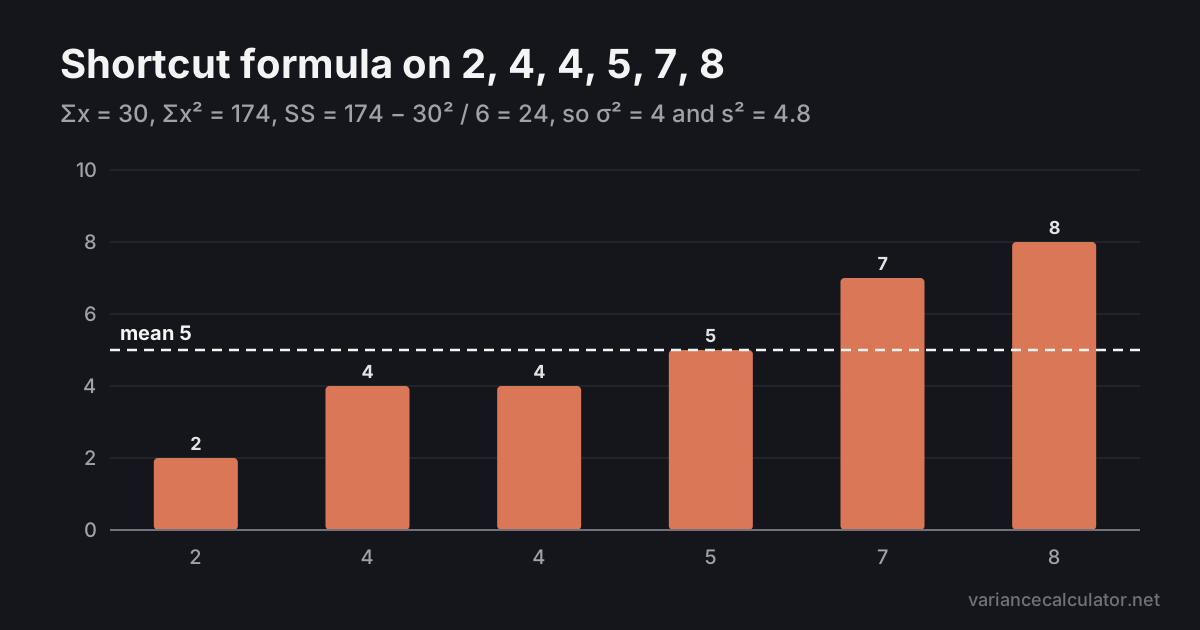
The shortcut (computational) formula for variance uses Σx and Σx² instead of individual deviations. How it works, a worked example, and when to avoid it.
 Statistics
September 24, 2026 • Sajid Ali
When Should You Use Variance in Statistics, Research, or Data Analysis?
Where variance is useful in research, quality control, modelling and finance, and when to report it instead of (or as well as) the standard deviation. With a worked example.
 Statistics
September 24, 2026 • Sajid Ali
Why Do We Square the Differences When Calculating Variance?
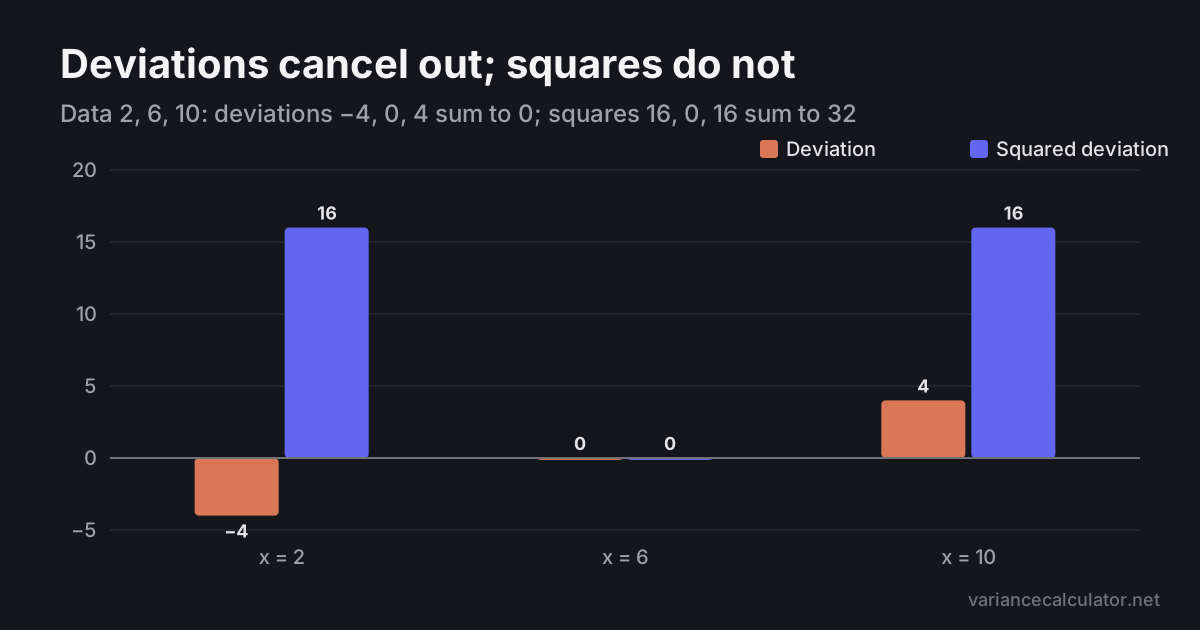
Squaring stops positive and negative deviations from cancelling out. A worked example shows the problem, the fix, and how squaring compares with absolute deviations.
 Statistics
September 24, 2026 • Sajid Ali
Why Is Your Variance So Large? Understanding What the Number Really Means
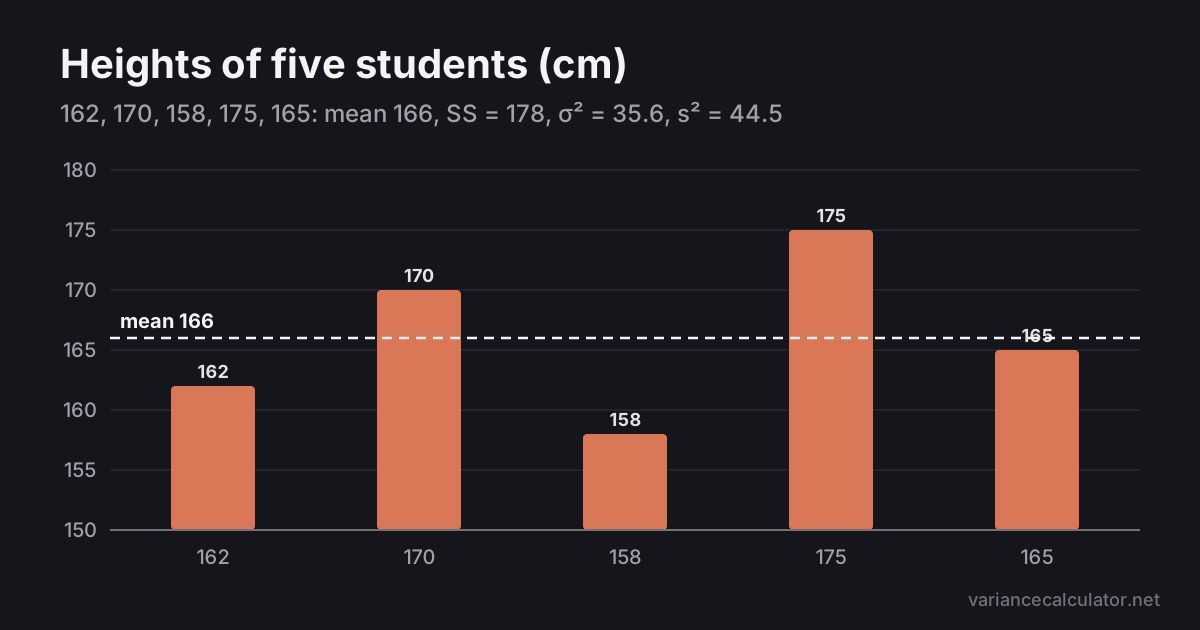
Common reasons for an unexpectedly large variance (outliers, wide ranges, mixed groups, large units) with a worked example and a checklist for investigating it.
 Statistics
June 20, 2026 • Sajid Ali
Sample vs. Population Variance: What's the Difference?
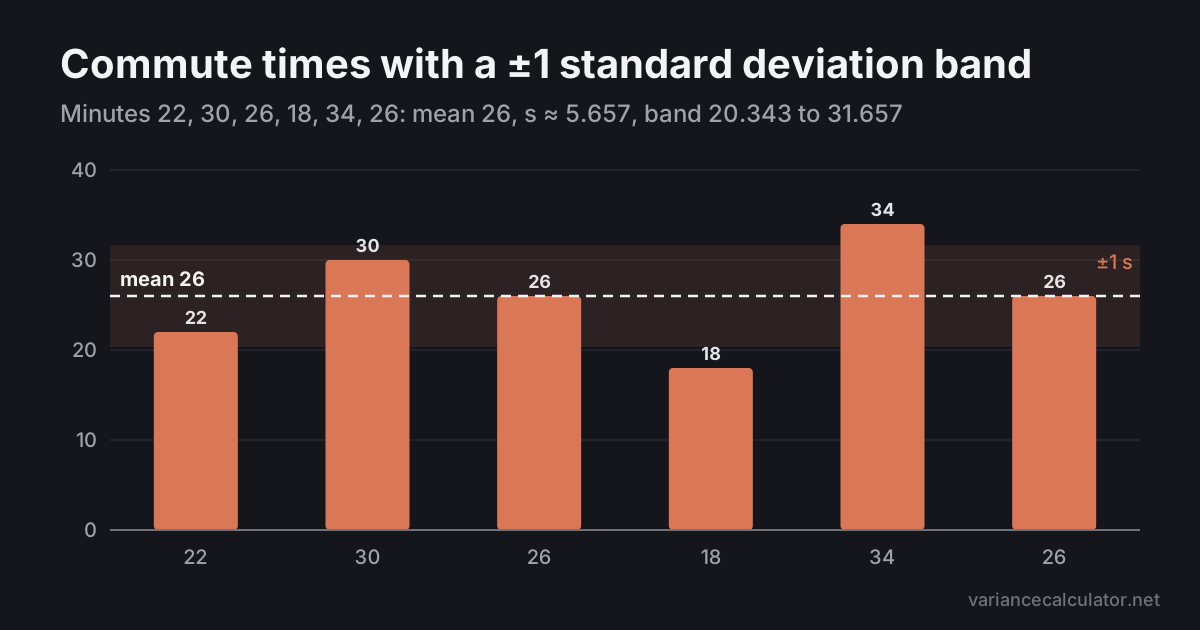
When to use sample variance and when to use population variance, why dividing by n − 1 corrects a bias, and a worked example with both formulas.
 Statistics
June 20, 2026 • Sajid Ali
Demystifying Standard Deviation and Its Relationship to Variance
Standard deviation is the square root of variance. Why we need both, how to read a standard deviation, the 68-95-99.7 rule, and a fully worked example.
Showing 1–12 of 13 posts